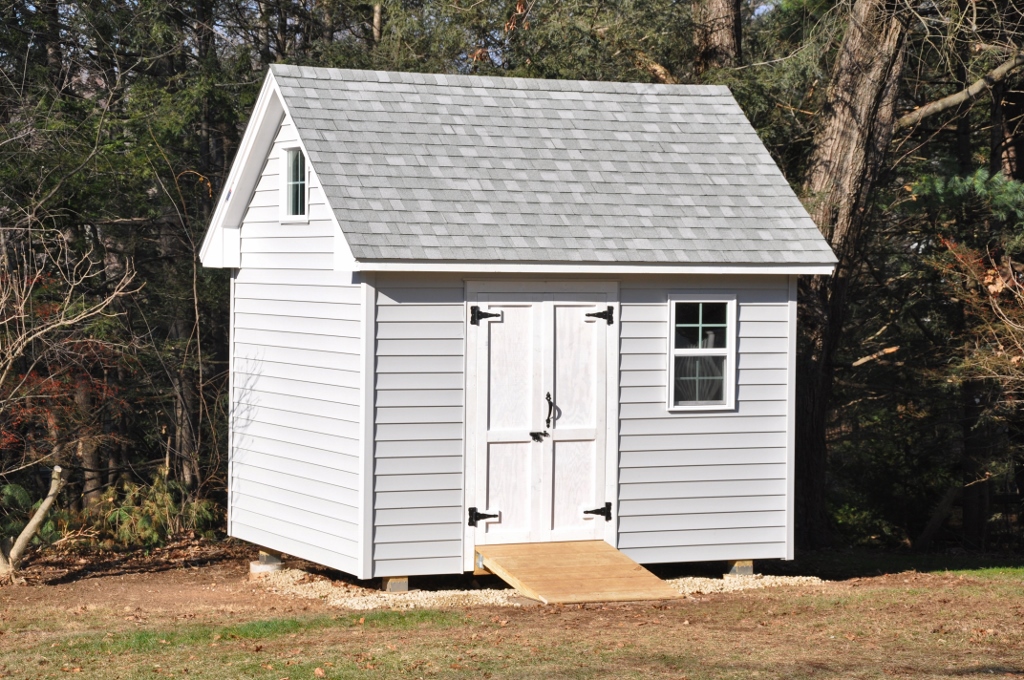
Shed is 10 ft. x 12 ft. It’s built on piers that extend below the frost line (42 in. here in CT) and posts to raise the floor framing at least 8 inches above ground for ventilation, reducing the risk of rot. The pier and post system also helped deal with the 16 in. grade drop from front to back of the shed.

Open storage.
Room for bikes, wheel barrows and boxes in the back. A future work bench under the window will make a nice place for potting.

Hanging storage.
A wall with pegboard up high for hanging gardening tools leaves room for heavier items below.

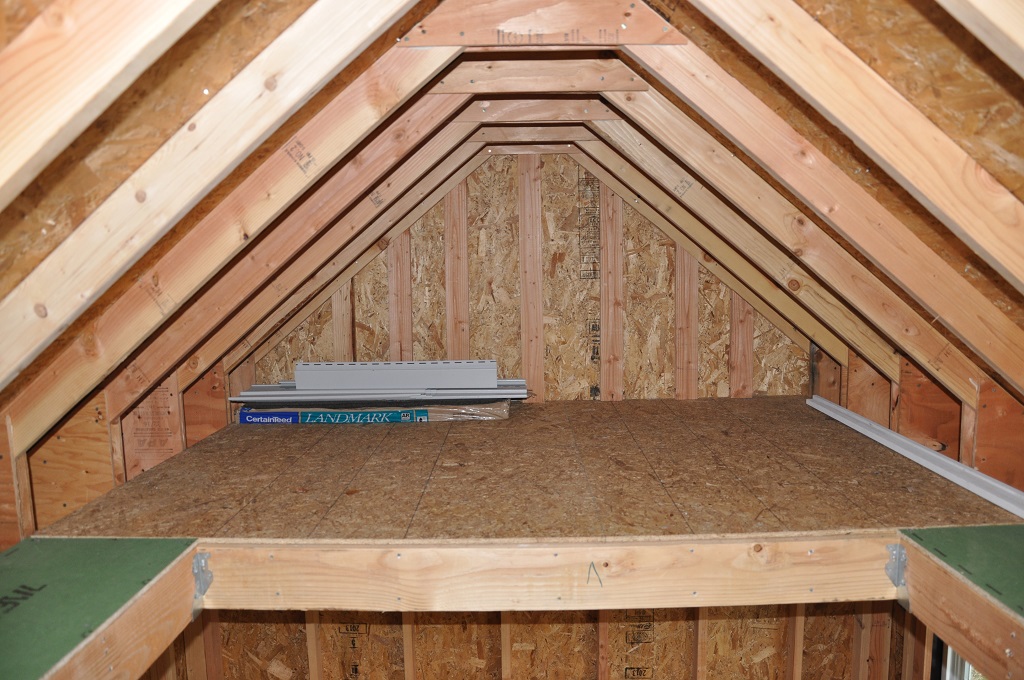
Light through the south-facing gable window illuminates the loft and spills through the access hatch to the shed below.
Large storage area to the right of the door is roughly 6 ft. x 6 ft.
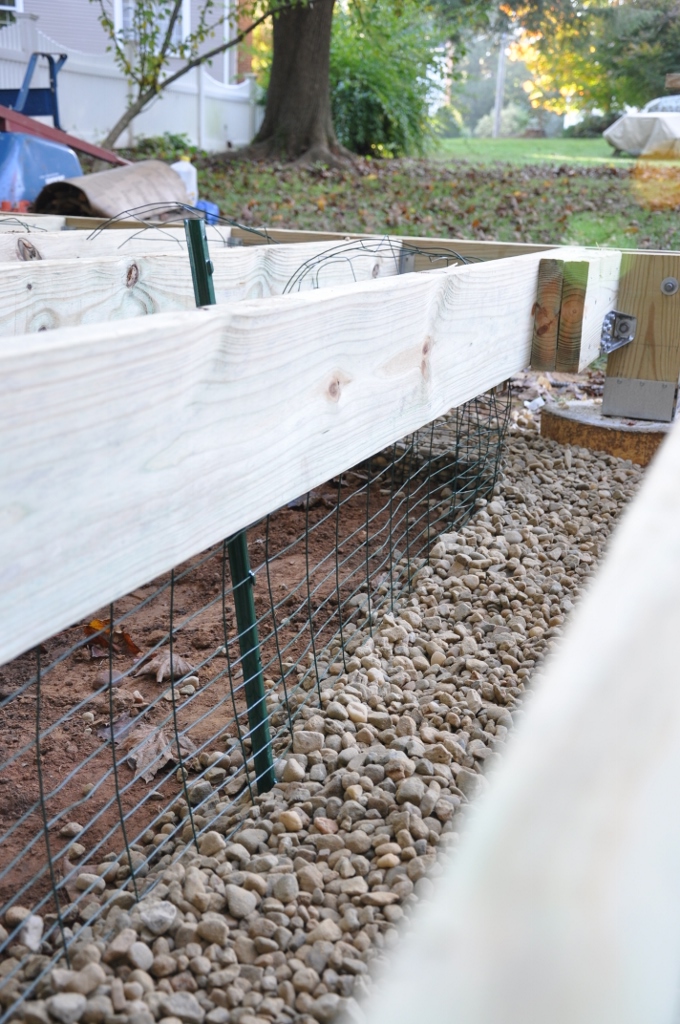
No unwanted visitors. Goat fencing is installed just inside the perimeter of the piers to prevents skunks, ground hogs, and the like from taking up residence. The fence is stapled to the joists and additional blocking, buried six inches in the ground and several inches of gravel built up around the outside of the fence.
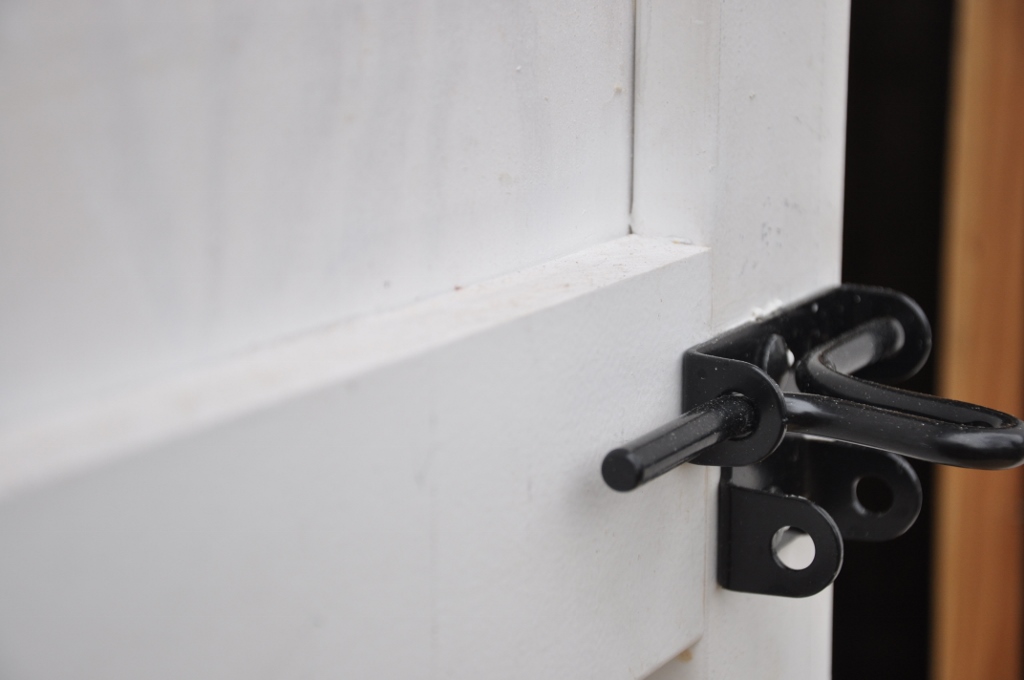
The door is made of 5/8 in. exterior plywood screwed and glued to a rail and stile frame. The tops of all the rails are beveled 5 degrees to shed water. Rails and stiles are joined with pocket screws and waterproof glue.

A little more upfront, less later.
Zip Sheathing with an integrated weather resistive barrier and taped seams costs more than OSB (oriented-strand board). BUT vinyl siding leaks– a lot. And OSB hates water–it’ll start growing mold and rotting with a few days exposure.
Planning for moisture behind the siding means the shed should last as long as the house on the property–maybe longer.
 Soulcraft Construction